
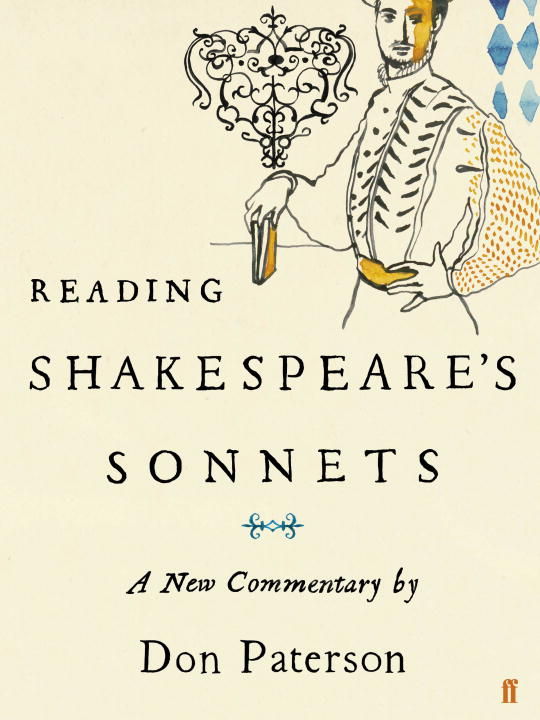
I’ve just finished teaching a five week course based (heavily) on Don Paterson’s Reading Shakespeare’s Sonnets: a new commentary (and the amazing iPad app that goes with it – god I love that thing!). I’ve written about it before, and how much I enjoy his style of commentary – intelligent, engaged, but definitely a bit cranky – and I still find it deeply satisfying to read, even when (or maybe especially when?) I disagree with him.
I had taught a course on this ten years ago, and my plan was to just repeat what I’d done then – a nice, simple wander through something I was familiar with already, looking at a couple of sonnets from each of the four groupings – the Procreation sonnets (1 to 17), The Fair Youth sonnets (18 to 126), the Rival Poet sonnets (78 to 86), the Dark Lady sonnets (127 to 152) – along with three or four modern sonnets each session that covered similar territory. Such a simple plan … what could possibly go wrong?
Yep.
“Go wrong” isn’t the right way of describing it, because I think it worked pretty well as a class in the end. But I found myself really struggling to limit things to just two of Shakespeare’s poems for each class, even after I split the Fair Youth poems into before and after the Rival interlude, thus creating five “chapters” in the sequence. Presumably it’s because I’m a decade older, and have spent quite a bit of the last ten years working with other poets on putting together their collections, so this big picture view of the sequence as a whole thing was what kept intriguing me. So many of the poems develop this doubleness – you read them one way on their own (which is the way 99% of people know them), but then in the context of the sequence they develop a whole new character – often darker, always more complex.
So we went deep – really deep. How deep, I hear you ask? Well, I essentially waterboarded my poor students with poem after poem after poem from Shakespeare – five from the Procreation arc, nine from the first Fair Youth arc, seven from the Rival arc, nine from the second Fair Youth arc, and another nine from the Dark Lady arc (although I cheated here, and added three more as an appendix). I did include some poems by modern poets, but only a handful.
(I’m going to be running another class shortly, just looking at modern sonnets. Stay tuned for details!) But we spent almost all our time working through the psycho-sexual drama that unfolds over the course of those 152 poems.
I think it essentially acted in the same way that language immersion does for learning a new language – so much exposure to Elizabethan language and to the machinery of the sonnet as a way of thinking that all my students now have these things in their very bones, without it being a conscious process.
Or possibly will be preparing Voodoo dolls of me as we speak … maybe wearing an Elizabethan ruff?

 A Dark Feathered Art