

The following is the final draft of the talk I gave for Ink versus Innovation back in August. I don’t go into a huge amount of detail on any one point – four minutes is a lot faster on paper than you think – so for those who are interested, four sources that you might find interesting are noted below. Enjoy!
Roughly five thousand years ago, when humans first invented writing, there must have been a lot of poets who wondered if this was the end of their livelihoods.

Poetry’s earliest role – apart from the sheer pleasure of playing with words – was to use patterns – rhyme, rhythm, syntax – to help encode and preserve information – who we are, where we come from, how to safely prepare this, how to use the stars to find our way to that.
Because up until the invention of writing, of ink, we were limited to intelligence – the amount of knowledge that could be retained in one human mind. The wise woman of the village. The bard of the tribe. Our deep knowledge was only ever one famine, one raid by a neighbouring tribe, away from being lost.
Ink, though, the invention of writing, of being able to make a permanent record – that changed everything. It was the beginning of extelligence, where knowledge could exist beyond the limits of working memory. Where we could take the knowledge of one group, and build on it, examine it, correct it. We could check each other’s working, and learn not only from our own people, but the people of other lands. Other times.
Isaac Newton famously said that, “if he saw further than others, it was because he was standing on the shoulders of giants” – he was talking about Copernicus, Galileo, Kepler, Brahe. Ink was what made those shoulders – their work – available to him. Ink allowed science to begin.
And humans really took to the printed word. Within just a few years of printing becoming established in Europe, there were fifty million printed books in existence, which means more books than there were people.
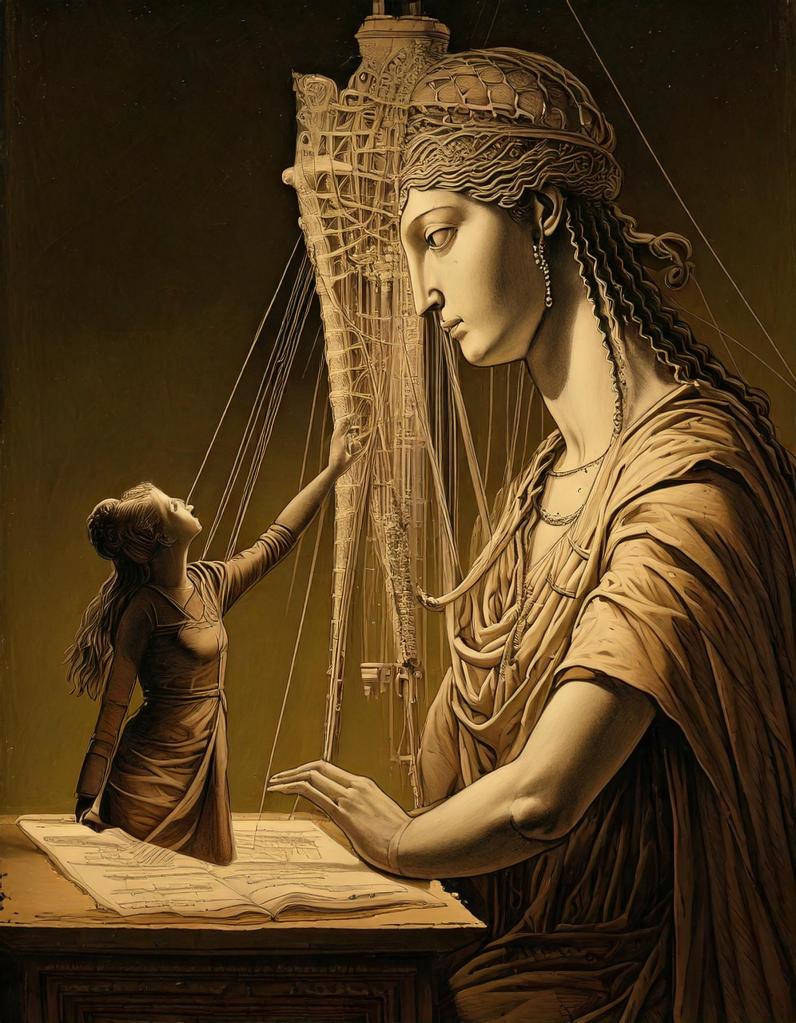
Parents feared that novels would ruin their daughters’ minds and character – sound familiar? Instead, the intimacy of the novel exposed a wide range of readers to the suffering and humanity of those who were otherwise ignored, or dismissed as little more than clever animals. Women. Children. The working class. Books like Oliver Twist opened people’s eyes to the mistreatment of children in British workhouses and orphanages, and sparked movements for reform. Just as Uncle Tom’s Cabin mobilised abolitionist sentiment in the US. We know this, because people wrote about it.
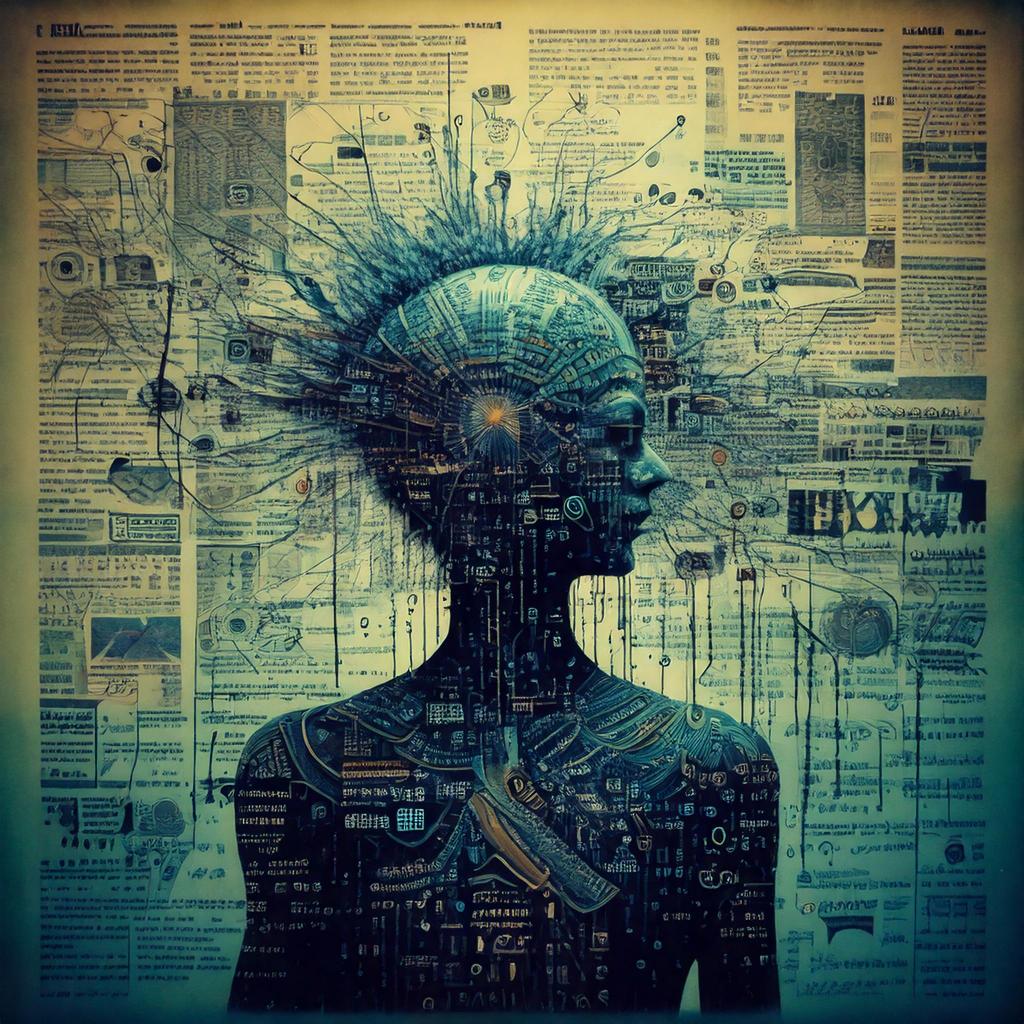
Modern ink is most often pulses of electricity – binary code, words on a computer screen. Which brings us to this new thing, AI, this ink that rewrites itself, that learns from itself. Where is human creativity in the face of that?
In 1997, Chess grand master, Gary Kasparoff, was beaten by the computer, Deep Blue. But that wasn’t the big one.
In 2016, the algorithm, AlphaGo, did the unthinkable when it beat eighteen-time world Go champion, Lee Sedol. It won four of the five games. But in the process, it played a move that no human would have played, and which opened up an entirely new way of approaching things, which is still being explored today. By humans. Modern ink taught the world a new way to play an ancient game.
Since the very invention of ink, we have had to ask ourselves – what is creativity? Originality? What do we value, and why? Nothing about that has changed.
Poetry didn’t die out five thousand years ago. Instead, ink allowed it to broaden out in reach and complexity. It changed. It even thrived.
Ink is, and always has been, innovation.
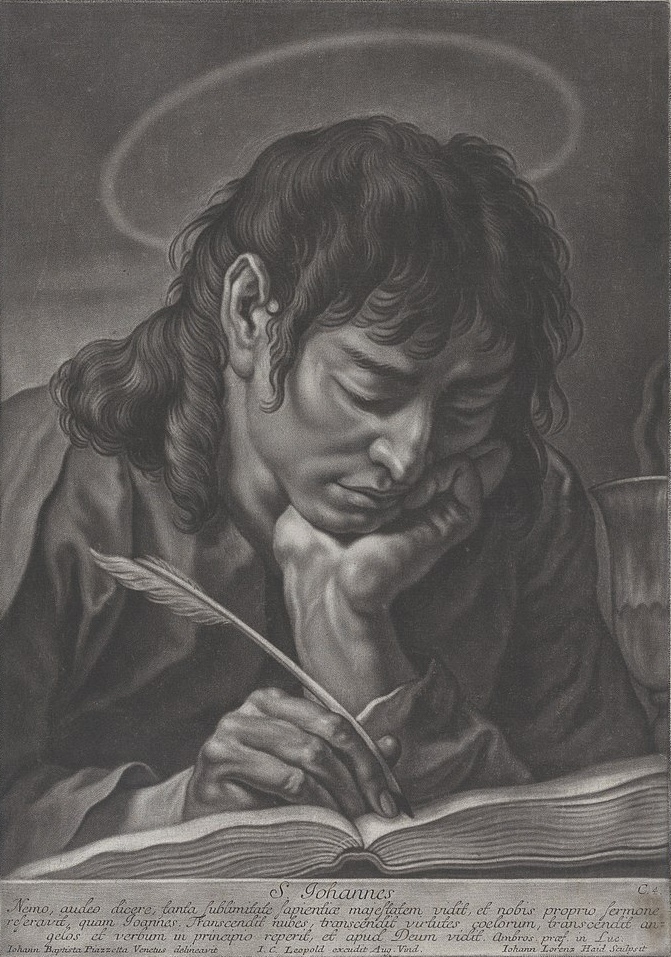
We’ll be fine.
The following are four main books that triggered the lines of argument in this talk. Please keep in mind that this was to be an entertaining spoken argument, not an academic paper, so rigorous accuracy was not my aim, and this list is provided purely for your interest.
Human Kind by Rutger Bregman, trans. Elizabeth Manton & Erica Moore, (Bloomsbury, 2020)
The Creativity Code by Marcus du Sautoy, (4th Estate, 2019)
The Better Angels of Our Nature by Steven Pinker, (Allen Lane, 2011)
The Science of Discworld by Terry Pratchett, Ian Stewart & Jack Cohen, (Ebury Press, 1999)
 A Dark Feathered Art
Thanks Joanna., for these excellent and interesting information and thoughts. ♥️ Sophia
I did go down an awful lot of rabbit holes. And I’m not entirely sure that I agree with my own conclusion – I’m a pessimist. But digging in to the history of how writing has changed, and the way that it has changed us, I do feel that writing is still an incredibly valuable tool. Like all tools – dangerous if abused, or used carelessly. But that’s the other reason why poetry matters – studying poetry makes you so much more aware of the ways language can be manipulated, so you are (or should be) harder to fool. And more able to respond in eloquent and persuasive ways.
I hope …