

This year, half gone, has worn heavy.
A sickness plagued the cattle,
and many were lost. A blight
has afflicted the crops –
the ears of grain grow sticky and dark
and will not ripen.
What we have to share, we give,
but so many are hungry.
When the king left, Father Higbald
stripped the hangings and plate
from his room, sent the sacristan
to sell what he could and buy bread
for the weakest, for the children.
And still the portents come.
Dragons in flight, great flashes
of fire from a cloudless sky.
The miller’s son ran wild – tore
at the skin of his chest and arms
until it hung in bloodied ribbons.
He saw visions. Demon faces
leered from the walls
he said. A day later he died.
Stranger still, at vespers three nights ago
a great flock of birds blackened the sky.
People cried out, or fled, or clung
to the altar cloths.
So many birds! Yet afterwards
not one feather was found
to name them.
And now again! Strange,
how their wingbeats sound
like oars.
Gail Ingram, the outgoing editor of A Fine Line (the magazine of the New Zealand Poetry Society), is about to reprint this poem, and I thought it might be worth giving some background information about it for people who don’t know the context, or who are curious about how I came to write it.
The poem is set in a very particular place and time – the monastery on the island of Lindisfarne, at the moment of the brutal Viking raid that marked the beginning of the Norse invasion.

Lindisfarne is an island(ish) off the Northeast coast of England, just south of Berwick-Upon-Tweed. There is a causeway that links Lindisfarne to the mainland, which comes above sea level when the tide is out. High tide cuts the island off, and reasonably often catches unwary tourists midway across. So if you plan to visit, check the tides!
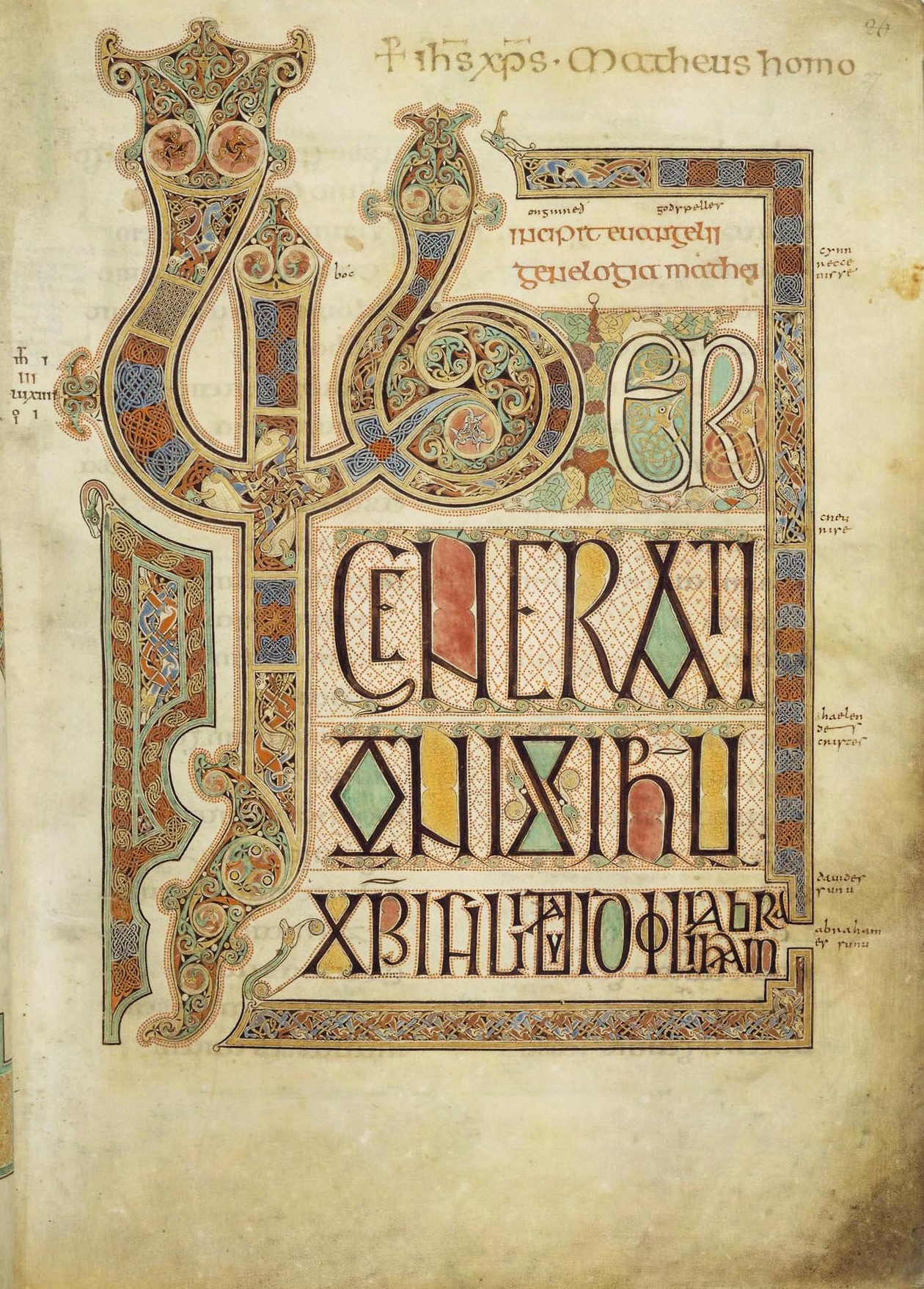
Lindisfarne is also known as “Holy Island”, and is one of the earliest Christian centres in Britain. It was founded in 635 AD at the direction of King Oswald of Northumbria. I won’t go in to the history here – if you have an interest in early Celtic Christianity it makes for some fascinating reading, and there are loads of sources online. The monastery on Lindisfarne became a deeply important place, with Saint Cuthbert serving as prior for a while (which is why he’s sometimes referred to as “Cuthbert of Lindisfarne”). The Lindisfarne Gospels – one of the most beautiful (and precious) examples of an illuminated manuscript – were created there. (Again, well worth a Google.)

The Vikings had been making periodic raids on British settlements for generations. You can almost think of it as a kind of farming – instead of growing crops and raising livestock yourself, you get together a band of wild lads and send them to … um, “harvest”, your neighbours’ stuff. And some of your neighbours’ female family members. I’m not trying to make light of it – by all accounts it was brutal and ruthless and would have been terrifying. But it tended to be over quickly – hit and run – and was more about stealing than destruction. So the survivors could pick up the pieces, and restart their lives. In many ways it probably wasn’t too different to the raiding that happened within the British Isles between neighbouring kingdoms, or even neighbouring settlements. These weren’t particularly gentle times. Which is why the monks of Lindisfarne must have felt relatively safe – protected by a general respect for (or reluctance to harm) religious enclaves, and by that lovely, lovely causeway.

But something changed in the late 700’s. We know that there were famines, and outbreaks of disease and weird maladies that some people now think may have been linked to ergot poisoning. It was bad across a lot of Europe. And without any warning, the nature of the Viking raids changed too. Lindisfarne was where this change first manifested itself. This time, the Vikings weren’t just grabbing what they could and rowing off into the North sea. This time, they were coming to kill – to ravage and plunder and sack and despoil – and to stay.
Living in the north of England, you encounter evidence of this huge change everywhere in place names. It ultimately led to the Danelaw, when the northern part of England was ceded to the Danes. (Once more I’m drastically simplifying – go read for yourself). I knew bits and pieces of this history before we went to live in the UK, so when the chance came to visit Lindisfarne, I leapt at it. (Well, drove to it.) (Having carefully checked the tides first.)
It’s a beautiful place, and the day we were there was glorious weather and not many people, so it was peaceful. Walking around the ruins, reading the information boards, consulting our handy English Heritage booklet, (keeping an eye on the time so we didn’t get caught by the tide …) but it also felt really exposed. I could imagine the monks here, suddenly under attack, with the isolation that had seemed like protection suddenly turning into a trap, leaving them nowhere to run to. How terrifying it must have been, in an age when everything was terrifying and chaotic and impossible to understand, let alone control. This new religion offered hope of some sort of divine order and protection. The Vikings brought chaos and the reality of human violence.
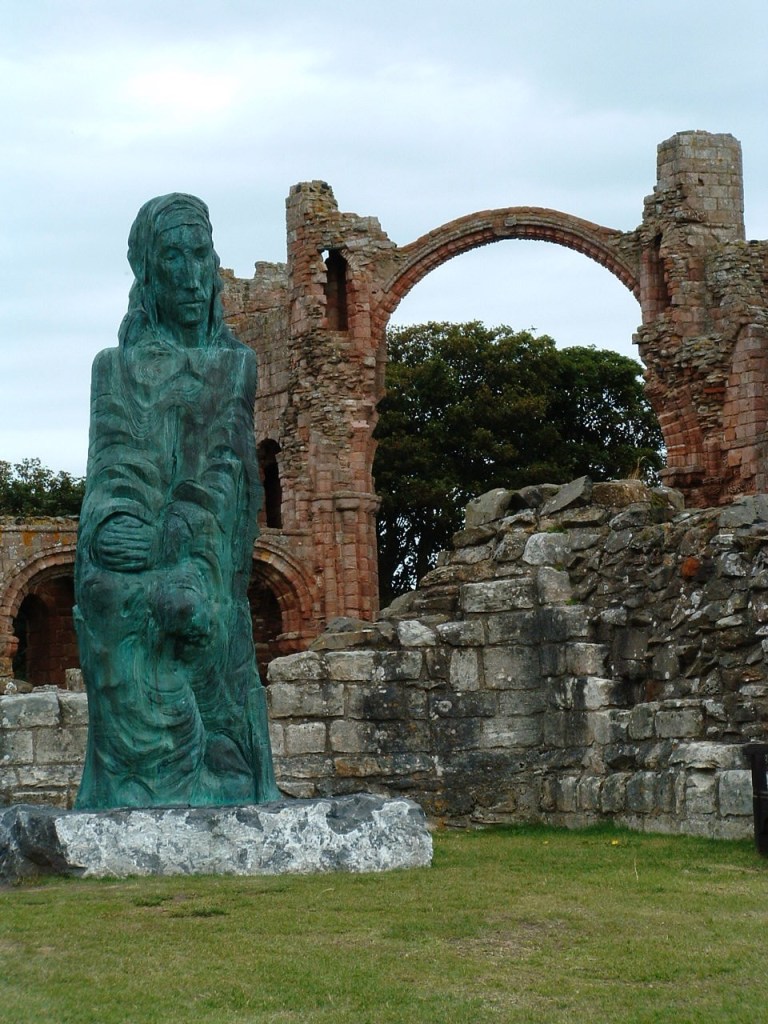
The next bit is where the poem came from. I think it was just a little before midday, and I had been wandering around, taking the photos you see here, looking at the ruins and imagining what it might have been like in its early days. I ended up near where the old altar had been. Suddenly there was a tremendous noise, and a flock of dark birds swept over us – no idea what they were. Not gulls, or sparrows or starlings. I don’t have a clear memory of the shapes, just this mass of dark wings. And the sound of them. Like rushing water.
Or the sound of oars.

It took me a couple of years of faffing (aka “research”) before I was able to write it, or at least get it to a decent first draft. I’d initially tried to write it in a kind of faux Old English, but Sheenagh Pugh very firmly persuaded me that this was not the best way of approaching things. She was right, of course. Sounding old-fashioned doesn’t work. The trick is trying to write from that worldview, not in that accent. (Technical term: the mimetic fallacy.)
But it did mean I needed a lot more research, to try and get my head around the sorts of things that a character of that time and place would see and comment on, and how they would perceive things. I looked into who the Abbot at the time was, the various monastic hours and what they would have done when, what birds were associated with the area, the symptoms of ergot poisoning, what form of scripture would have been used (we’re a good eight hundred years ahead of the King James version of the Christian bible), a side-trail about the preparation of vellum … fun, but time consuming. And largely invisible – it helped me with shaping and phrasing, but didn’t make it in to the poem as such. The invisible scaffolding that sits behind it. The history that lets the poem reach in to the present while still feeling of the time in which it is set.
At least, that’s the theory …
 A Dark Feathered Art
A fine and appropriate poem, with or without Viking input.
Thinking yet again of my home town, Los Angeles, not to mention the national blight!!!
sheesh – what a start
glad there’s some poetry around
Mary Cresswell
mary.cresswell(at)outlook.co.nz
Joanna,
Really nice piece. I tried to comment on Word Press but with all the demands that I login and stand on my head and is this really your password, it got too confusing.
In any case, I really liked this piece. I like how you combine the history, your travels and your passion into a piece that makes me feel the history.
Have you looked at Substack? I’m experimenting with it. It seems to be a place intended for writers. Facebook has been more and more annoying over time.
Cheers,
Dennis Gallagher
>